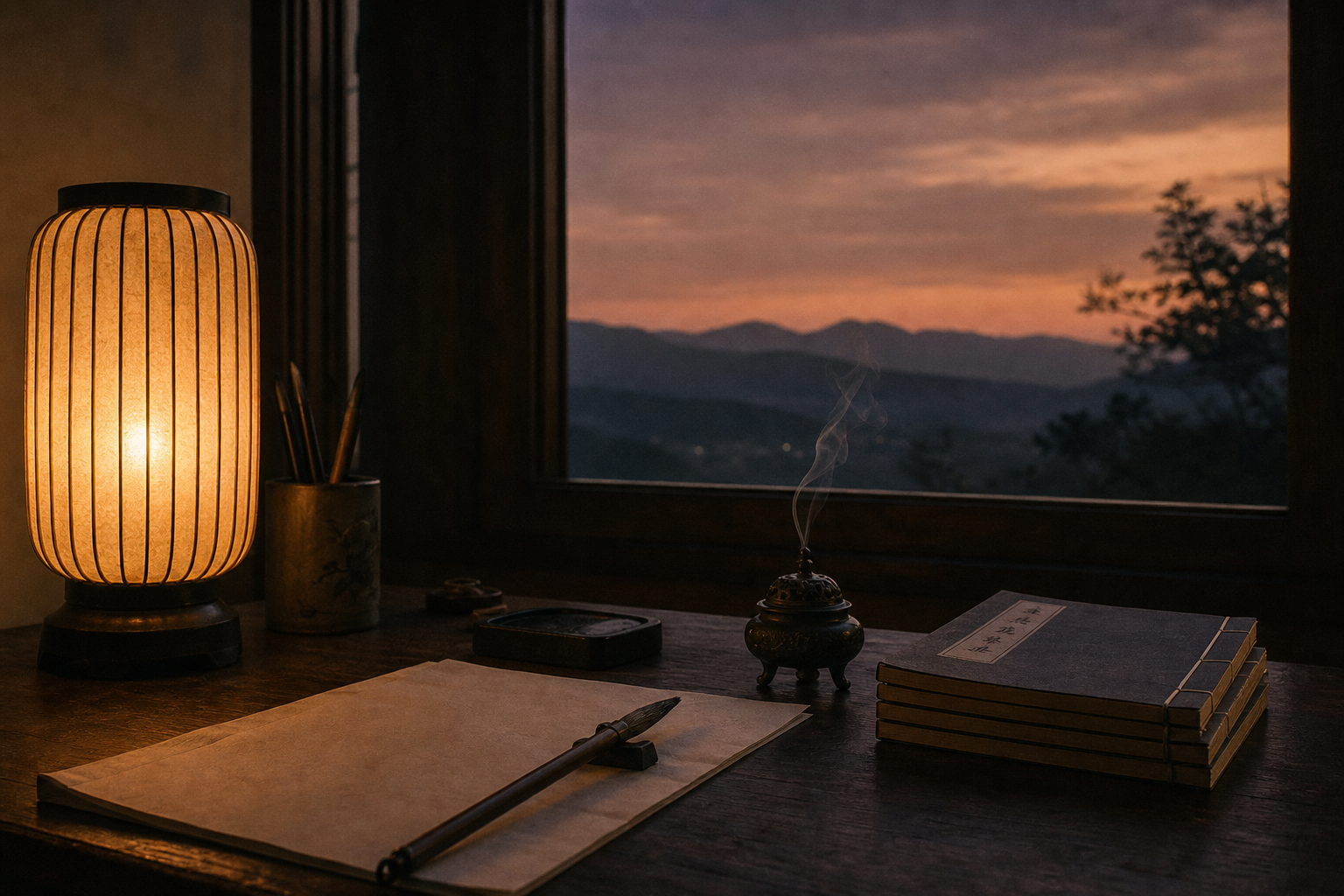
 Why Ancient Chinese Scholars Burned Incense Before Writing
Why Ancient Chinese Scholars Burned Incense Before Writing
Not for fragrance. For silence — how Song literati drew a line before the brush fell.
Collection · Incense & Stillness
Incense does not make the writing better. Stillness does.
Night falls.
The study lamp glows dim.
A scholar unfurls paper.
He lights incense first.
Not for fragrance.
For silence.
Before a single brush touches paper, the smoke rises.
Slow. Thin. Unrushed.
This was the rule of Song Dynasty literati.
Not a luxury.
A necessity.
Huang Tingjian, the great Song poet, kept incense at his desk always.
He did not write for fame.
He did not write in haste.
The smoke cleared the noise of the world.
It marked the line between busy days and quiet creation.
In ancient Chinese literary culture, this was the xiang xi—the incense ceremony.
No grand displays.
No crowds.
Just a burner, a stick of incense, a desk, and a mind.
The smoke did not hurry.
Neither did the scholar.
Culturally, incense held three truths.
It was a practice of self-discipline.
Of calming the heart.
Of setting a rhythm.
The world outside moved fast.
Inside the study, time slowed to the pace of burning smoke.
Today, we rush every task.
We write, create, and act with no pause.
The old ritual holds a quiet lesson.
To make something meaningful,
you must first stop.
Breathe.
Let the noise fade.
Incense does not make the writing better.
Stillness does.
夜色垂落。
书斋灯火微暗。
文人铺展素纸。
必先焚一炉香。
不为闻香。
只为静心。
笔未落纸,青烟先起。
缓缓。浅浅。从容不迫。
这是宋代文人的日常准则。
非奢靡消遣。
是修身必需。
北宋诗人黄庭坚,案头常年置香。
他不为虚名落笔。
不赶时辰作文。
青烟涤尽俗世纷扰。
划开庸常忙碌,与静默创作的边界。
在中国古典文人文化里,这便是香席。
无需盛大排场。
无需宾客满堂。
只一炉、一香、一案、一心。
烟不匆忙。
人亦从容。
在文化深意里,香藏三层真谛:
是自律修行,
是安顿本心,
是校准生活节奏。
尘世步履匆匆。
书斋之内,时光随青烟慢下来。
今人凡事追赶节奏,
落笔、创作、行事,从无停顿。
古老的香事,藏着一句温柔启示。
欲成就有分量的事物,
先要停下脚步,
静下心神,
让喧嚣慢慢褪去。
香,不能让文笔更好。
心静,方能落笔有神。