The most precious things in life are not made in haste.
Ancient texts say it plainly:. A tree is wounded. It heals. It creates agarwood. Not all trees make it. Only the Aquilaria, broken by wind, insects, or storm.
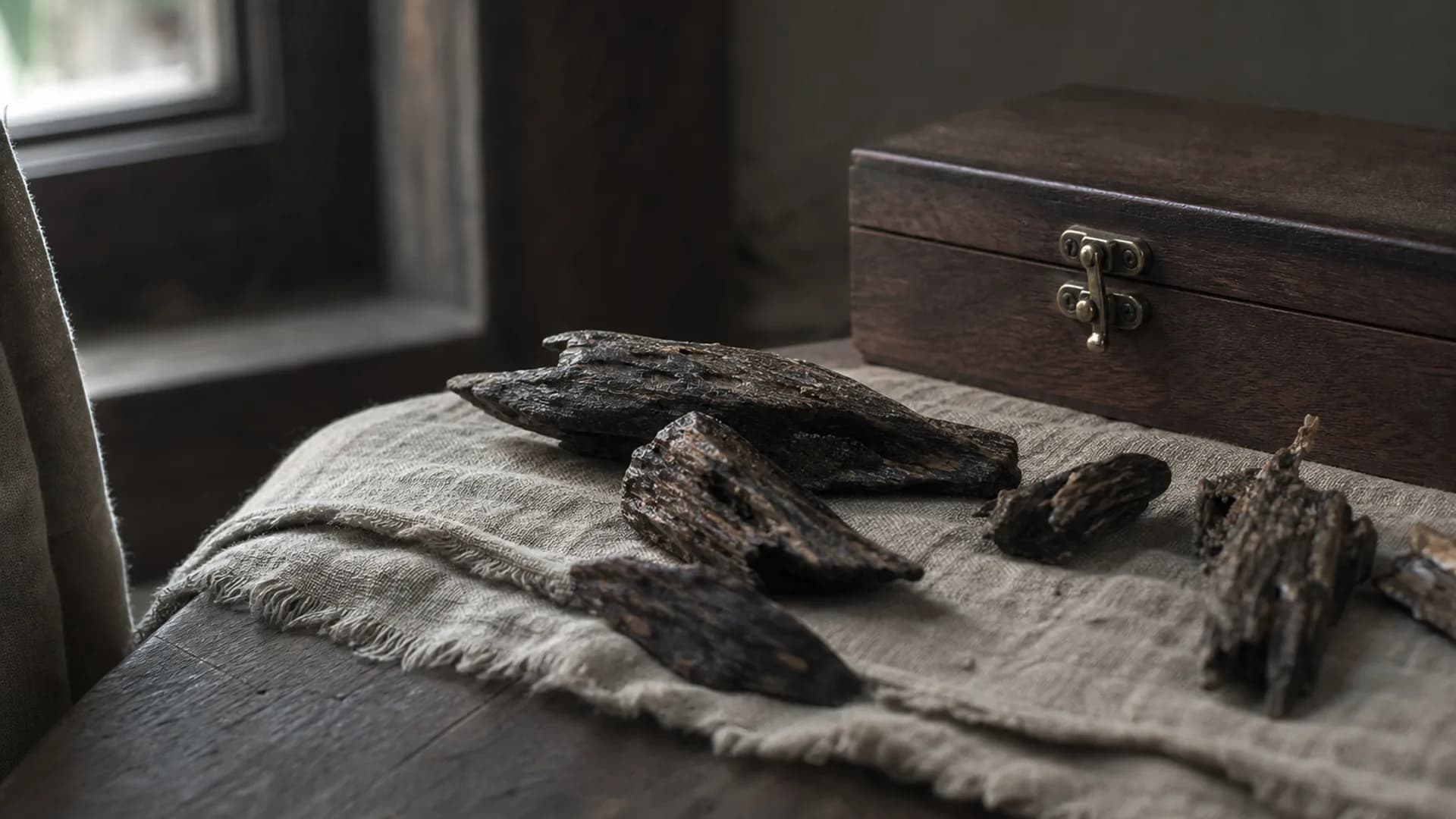
The tree does not die. It secretes resin. It seals its injury. Decades pass. Centuries, sometimes. The wounded wood darkens.
It becomes agarwood. In ancient China, the finest agarwood came from Hainan. Traders traveled for months to find it. Scholars wrote poems of it. Emperors prized it above gold. Records in Xiang Cheng—the classic book of incense—detail its virtue.
Compendium of Materia Medica spoke of its quiet power. It was not just a scent. It was a product of suffering and time. The philosophy is simple:. No wound, no fragrance. No time, no treasure.
Agarwood does not form quickly. It cannot be forced. Pain, patience, and years alone create its depth. Today, we call it oud. We chase its rarity. We miss its meaning.
The most precious things in life are not made in haste. They are made by surviving. By healing. By letting time do its work.